Friday, November 2, 2012

Going, going, gone...

It's been 27 months, some months much longer than others... but this adventure has come to an end. I did! I completed Peace Corps and now I'm heading home, the scenic route. To celebrate our Close of Service, 6 of us are cruising home, two weeks across the Atlantic. I've made it to Barcelona via Lisbon, which was gorgeous. I can already tell I need these two weeks to readjust to this different pace of life, the rich foods, the cod weather, the new fashions, appropriate interactions and conversation topics... The list seems endless, but 2 days in Barca the kinks are starting to work themselves out. Hopefully, the transatlantic adventure will smooth out the rest.

If everything goes according to plan, I'll be home by Thanksgiving, such a glorious holiday! Thanks so much for following my Senegalese adventure on this blog; I'll figure out some way to get you updates on the transatlantic adventure. Stay posted

Friday, October 19, 2012

Summer in Senegal


I've let the blog slide... for months, oops!
I have a good excuse though, two actually. First, rainy season makes communication and electronics even more dicey than the already are. Second, the wrapping up of my service and mad scramble to say good bye to so many friends I've made here has kept me busy. Blogging, alas, just has not been high up on the to-do list in a while.
So what have I been doing these past 3 months?

  • Saying goodbye to my Community Enterprise Development (CED) friends... Senegalese style! We all came here together, but our goings have been staggered. My neighbors, Pam and Sam, have been my closest friends during my service. Watching them leave was sad, but they know how to throw a great Senegalese party: music, dancing, deliciously greasy food, chair rentals, etc.

Dance off with my Senegalese twin, Nenegalle!

  • Traveling to see sites and help friends with projects. I finally made it out to beautiful Bakel, which really is beautiful and nice town despite being way aways from everything. Brian showed us everything: from his work at his Master  Farm demonstration site to the majestic Fort Bakel, from his village nestled in the rocky hills outside the city to all the best bars in downtown Bakel. And we ended our visit with a stay in a barbershop. Anything can happen in Bakel!
Longingly looking out to Mauritania
  •  Planting mangroves! Volunteers in the Kaolack region organized huge reforestation efforts to reforest the Sine-Saloum deltas with mangroves. Mangroves provide a habitat for the marine life of the delta, flowers of local honey bees, firewood for villages, and shelter for migrating birds. Not to mention, the mangroves are beautiful! The mangroves drop seed pods into the water, where they float until they lodge in a bit of mud and hopefully take up root. We sped up the process by collecting and sorting through the seed pods before planting the healthy pods in the mudflats.
 Cuddling with lion cubs! After the Toubakouta Mangrove Refoestation day, volunteers headed to the Fathala Game Reserve, where the park is trying to familiarize 5 lion cubs with people. The cubs were surprisingly friendly. Other highlights of the park included zebras, giraffes, and antelope. So I can cross safari off the bucket list.
  • Experimenting with henna! After one last shopping to Diaobe (maybe the largest outdoor market in West Africa), my neighbor Jessica and I decided to try and dye our hair with henna. Only 40 cents! It sort of worked... More importantly, we got gris-gris made by a traditional medicine man. Gris-gris come in all shapes and sizes; they can be a necklace, armband, anklet, or strip of leather to wrap around your leg or waist for protection from just about anything. 
Henna got messy
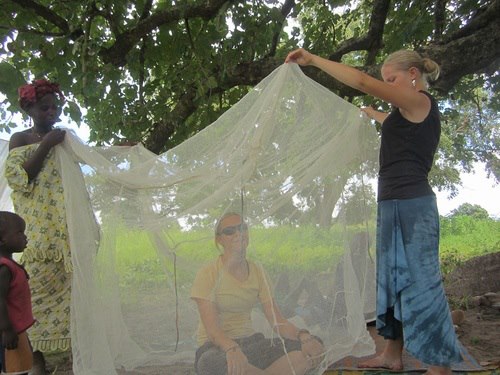
  • Sewing mosquito nets! My friend Sarah organized an epic tour of Kolda region, going village to village showing people how to mend and take care of their mosquito nets. Mosquito nets are essential in protecting people from the Anapheles mosquito, carrier of the parasites that cause malaria. Malaria is a huge problem in Senegal, particularly dangerous among young children and pregnant women. The disease kills hundreds of children in our county every year and infects many more, driving down productivity and life expectancy in the region. But something as simple as sleeping under a mosquite net everyday can drive down infection rates. I only helped out at a couple villages, but Sarah went to over 15 villages spreading the good word of the mosquito net.
  • And of course, farming! Another season of planting thousands of trees and setting up field demonstrations is finally over! And I am ready to leave, ready to move on. Senegal has been lots of fun but I am looking forward to the next adventure.
Thursday, July 5, 2012

Slowly Slowly to Catch a Monkey


Almost everything I have accomplished during my Peace Corps service has been just a baby step in development: asking village children to draw their dreams and desires in crayon, funding middle school girls through another year of school, explaining contraceptives to the adult third of my village, demonstrating simple organic solutions to people’s pest problems in their fields and gardens, planting some fruit trees, and crossing all sorts of gender barriers by being my (independent, very American, touch feminist) self.
My work is in the realm of micro-development. I’m not out to change the world single-handedly, but I am here to make a difference. However small-scale and localized my work may be, the hope is that something larger will grow from it all.

The Senegalese proverb says “Slowly slowly to catch a monkey.” The message rings true for many Peace Corps volunteers; we aren’t here for very long and hardly have a handle on the language and culture when we arrive, but our work builds on each other. After hundreds of baby steps, things are just starting to come together and really change Senegal. One place I’ve seen the baby steps add up is in our village’s school library.

The US Embassy and several other individuals have donated books to Goundaga’s primary school, from which the school director and I have formed a small library. While initially getting the kids to read was a painful process, our reading club is starting off. In fact, the reading club is no longer official anymore since so many kids want to read every day and not just at cub sessions. While the following no longer includes all the students in the top three grades, the following that has developed naturally is eager to read anything they can get their hands on and our picking out more challenging books, chapter books, all by themselves. As tedious as listening to ten renditions of Snow White in French ten times over can be, it’s truly heartwarming to have children knocking on my door to see if I don’t have something else for them to read, or picking out the long science books with big words because they want to learn and ask questions, about photosynthesis or meteor showers perhaps.

As if to symbolize the proverb, yesterday walking back from a morning at the school library, I heard shouting and sawing half the village running towards my host family’s compound. I caught up with some women gathered outside the fence of the compound, peering in. Apparently, a big monkey had come dashing out of the forest into the village, where it was chased across village (only 150m wide, maybe), it climbed into my backyard, then scurried across the compound and took refuge in my host father’s hut., where it was hiding from the mob of children (armed with sticks). My host uncle was trying to keep them at bay (with a stick of his own)and had shut the monkey into the hut so the children couldn’t get at it. They mob children were all screaming, dancing, clapping; some would try to sneak around the back of the hut only to be driven away by Ba Samba. Some other kids went to inform Demba of the unexpected visitor in his hut.

When Demba arrived at the compound, he also refused to open up the hut and tried to chase the children out of the compound. The compound was overflowing with the crazed kids looking to kill (which the adults didn’t mind so much) and eat the monkey (which, according to the elders, was un-Islamic and a little too close species was, according to me). The village only has a population of around 400 and a good two thirds are children; at least half of those children were waiting for the monkey. This was a standoff.

After an hour or so of waiting, most kids had gotten bored and given up, or at least wandered over to the neighbors to hang out there. Demba finally decided to let the monkey go free. Sadly, the monkey wasn’t very bright and instead of running left, hopping over the fence, and scurrying across the cotton field into the forest, it chose to go right. It landed on the other side of the fence in our neighbor’s compound. A shout rang out and soon all the kids had remobilized from seemly nowhere, stampeded across the compound and after the monkey.

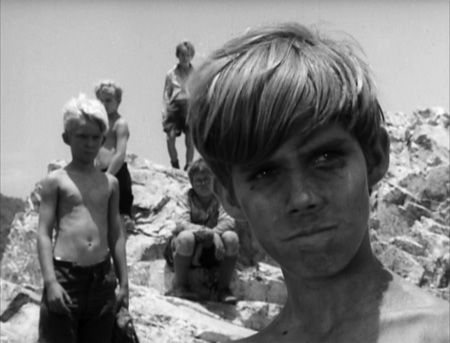
Speaking of school books, the image of the stick wielding, barefoot children giving chase instantly brought to mind the last scene of The Lord of the Flies: the shouting, the hunt, the group frenzy electrifying the air. Different ending, though: no savior for this ape. The kids cornered it, beat it to death with their sticks, and then started the cooking fire. O, and this all went down in amount two minute; so who knows where that proverb came from.

Concrete Jungle


First days back from the “land of the free, home of the brave” felt amorphous, surreal even, like leaving one world and stepping into another one somewhere in between, Dakar. The first day back I ate nothing and slept most of the day; the next day back, I slept less but still couldn’t eat much. Nothing seemed appetizing after spoiling myself for two weeks… And this is Dakar, normally the land of plenty where eating is half the joy of being there!

Another topic of interest for every Peace Corps volunteer traveling to Dakar is transportation. Relative to a PCV’s living allowance, taxi are very expensive. Yet, Dakar is too sprawling to walk across and not particularly bike friendly (assuming you have your bike with you). Therefore, it behooves the volunteer to learn the bus system and minibus routes. Still these are time consuming, over-crowded, and often lead to a (mis)adventure, more so than public transport in the US. Taxis can be a great solution for group travel, but that’s no guarantee it will be a simple trip from point A to point B.

 Take for instance the extraordinary taxi experience I had with my Dakar visitors Nas and Dan. The ride was initially sketchy because the taximan had some trouble getting started, but enough taxi rides in this city and that is no longer so much an omen as a norm. Once we were off, the keys kept slipping out of the ignition. The first couple times this happened, no problem, we kept rolling. But then the car approached an incline and started to stall every time the keys fell out. We were enduring, but the situation soon became ridiculous: the keys wouldn’t stay and the car would jerk forward two feet and stop again, jerk, stop, jerk, stop, etc. Finally, patience (and the humor in the situation) left us and we let ourselves out of the jerking car. The taximan was very upset and insisted that we get back in the car.

Unfortunately, we were on a stretch of road not frequented by empty taxis, and even if they were empty it was dangerous for them to stop because of the curve in the road. So we walked forward to the next block. But the pace of walking was the same as the pace of the jerking taxi, so we had this irate taximan leaning across the passenger’s seat and screaming at as to get back in the taxi. Awkward, until we arrived at the top of a hill and gravity began to work in taxi’s favor, leaving us behind and alleviating us for the taximan’s muddled Wolof-French rant.

Luck, however, was still not on our side. It was another couple blocks until we found a minibus and decided to give it a go. Although the fare collector claimed the bus was going our way, he had stretched the truth a lot (no one lies in Senegal).  We got off just two blocks later to hustle another taxi. By the time we finally got to where we were going the whole ordeal was making us giggle again. Always an adventure in the concrete jungle.

Tuesday, May 22, 2012

See you later! COS Conference

Close of Service (COS) means I've made it through my two years in the Peace Corps: I've lived in a different culture, learned a new language, met so many interesting people, challenged established beliefs (American and Senegalese), served my country and the people of Senegal. It's kind of a big deal...
In order to help volunteers through that transition, Peace Corps Senegal brings us all together as a training group one last time to reflect, debrief, and start looking at our options in the future. Reverse culture shock is an overwhelming process, so it's really great that we can come together as a training group, remember the good times, discuss tentative plans for the future, and get away for a weekend in a beautiful beach house.
My Training Group
What's really amazing is how close I've become to my training group, even though some of us are so far apart and don't get to see each other very often. They are a great group of people that have been nothing but supportive. And seeing everyone all together again was such an exciting moment - it doesn't really matter that this is the last time we will be all together. It doesn't matter that life is going to lead us down a hundred divergent paths - something will keep us together and I'm sure we will run into each other again.

Goodbye Send-off Breakfast
While we were going through our COS conference, the training group before us was getting ready to actual COS and leave. I have spent so much of my service working with these people, not to mention they make up about half of my neighbors, that it is surreal to know they're gone. I am so happy and excited for them: congratulations on completing Peace Corps service and getting to go off on some new amazing adventure! Of course I will miss them, but I have a feeling that it's not actually goodbye... I'm going to see all these wonderful volunteers again in someplace better!

Easter Ceeb

Village had gotten so quiet; all my host siblings and cousins had gone off to CEM (middle school) and Lycee (high school) in the bigger towns. Suddenly there is no one to have a friendly conversation with during siesta or late at night waiting for the winds to cool things off. The daily discussions of market prices, okra, and why I'm not married yet just don't do it for me. And these seem to be the only things anyone ever wants to discuss with me. I had this idea that maybe I ask Senegalese villagers their opinions on GRE essay prompts, but it kind of fell on deaf ears - what was I talking about and how did that have any relevance to their very orderly (if not monotonous) lives? They do things they way they've always done them because that's the way to do things... or so they say.
Down time during the day, I played with the kids. They are a lot more fun: leap frog, coloring, reading at the library, adventure hikes, and imitating anything and everything. Playing with them is great, but I'm not a huge fun of the crowds of children that tend to develop - 8 is my cut off...

When Easter break finally rolled around and my teenage/young adult siblings started to wander back home, it was such a relief to have more stimulating conversations and debates about values, lifestyles, beliefs. Suddenly the dull evenings turned into inter-village soccer tournaments and late night parties. The students were interested in my projects and tagged along everywhere. And older siblings came, listened and helped younger siblings read books from the Goundaga Primary School Library. (Thank you all for your donations!) Everyone is so excited about the library; I got 5 kids reading their first chapter book!

Harriet, Lisa, and I cooking over the fire.
Best of all, my favorite girl friends in village came back for the holiday: Lisa, Harriet, Jenny (not their real names, but they figured if I got a Senegalese name, they should also have American names). We had a long over due cooking date so we planned to make the most patron (bougie) ceeb (Senegalese style fried rice) ever! Unlike people stuck in the village all the time, i.e. the adults and children that I had spent all of the previous month with, these young women know their food and know the importance of a balanced meal. Our market list was full of every vegetable in season and a special note for Lisa's dad to catch us the biggest fish he could find. One of my host mom's, Mata Sadio, got on board and sent us a small mountain of fresh basil to stuff the fish with. My neighbor, Jenae, and her friend visiting from America came by too to enjoy the day in village.


So, how do you cook the best ceeb ever?

Easter Ceeb
We started washing and cutting the bucket full of vegetables we had bought in the road town market. We cleaned and gutted the big fish. We built a big fire and boiled a big cauldron of water over it. We picked the rocks out of the rice and rinsed it before steaming it. We mashed basil, garlic, pepper, green onions, and chili peppers up in a mortal and pestle and stuffed the fish with the mixture. We fried the fish with oil and onion, put that to the side, and fried some potatoes and sweet potatoes. We added water and spices and boiled the vegetables until soft, then we added the steamed rice and let everything simmer. And when it was all done, we served it up to the whole family and ate until we were stuffed. So good!

Friday, March 16, 2012

Tamba Race Aftermath

Hot season has arrived and with it, a constant trickle of sweat. The notebook I wrote a draft of this blog in left a rectangular sweat stain on my pants. Even holding a pen is sweaty business here.

Yet, somehow, despite the heat and lethargy it forces on everyone, the Race for Education in Tambacounda went tremendously well. Over 100 participants came to run the 5k, 10k, or half marathon and we raised over $3000 to fund projects supporting girls education in Senegal. The runners were a diverse crowd: firemen, police, Peace Corps volunteers, local students, teachers, school admins, military, a marathonist from the Caimens team, and even the Prefet of Tamba (the county's official head)! The race achieved its purpose and had everyone out talking about girls education... or at least how silly we all looked running through the city.


The Principal of CEM Wassadou came all the way to Tamba to run 5k and support the girls at his school!

The race was also a personal achievement for me. It's the furtherest I've run and I did it in hot, dusty Tambacounda, Senegal, West Africa! So I gave myself a pat on the back and spent the next two days lounging around the regional house. It took a good week for biking (main means of transportation around here) to not be painful and leave me exhausted after every small trip. Somehow, I muster enough energy to bike all over the place 2 days later and put together a Pest Control Training in a village across the river from me... Then I needed another two days to recover from heat exhaustion and soreness. But I think I'm finally back to being a normal, functioning human being! Thanks everyone for your support!

Tuesday, February 14, 2012

Just over two weeks left until the Tambacounda Race for Education. I've pledged to run the half marathon in an effort to raise money for Peace Corps Senegal's Michele Sylvester Scholarship. Each year the scholarship awards middle school girls with school tuition and supplies for their hard work and excellence in scholarship.

This past year, I have been working with the 9 scholarship recipients at the middle school in Wassadou and it has been one of the most rewarding experiences I have had so far. I have learned so much about the hardships these girls, and so many others around the world, face everyday just to get half an education. [I am so grateful I have always known the support of family, friends, and teachers in pursuing my own education. Thank you!] Together, these 9 girls and I planned a two day conference, drawing attention to these obstacles and searching for the resources they need to overcome. The event concluded with a moving dialogue between parents and daughters, pledging their support and understanding for one another. Once again, the conference could not have happened without Awa Traore, Peace Corps Senegal's amazing cross-cultural instructor.

The work and effort Awa, Aissatou, Maimouna, Binta, Goundo, Fatimata, Jenabou, Fatimata Binta, and Awa put into their schoolwork and this conference inspired me to run. Their principal was inspired too, and has pledged to run 5k and donate the money he raises back to the girls at the Wassadou middle school.

Seeing me running through their fields early in the morning, people in my village are becoming inspired too. When they first asked jokingly what in the world I'm training form we were laughing at my bright red face and sweat-soaked shirt. (I'm definitely not the image of beauty after a run.) But their faces quickly grew serious when I explained the cause. Especially, so many women, my host moms, grandmas and aunts, who never had the opportunity to go to school, never learned anything but pounding millet and spinning thread.

No one here thinks that I can actually run the 21 kilometers, but I got a couple neighbors to say that they'd throw a dollar my way if I come back with a half marathon certificate. The money's a nice gesture, of course, even more so when it's coming from those who have so little. What really makes me smile, though, is getting the conversation started: girls education and how necessary it is. Now when they see me out running at the crack of dawn, they know I'm not just crazy. We are making a difference - one stride at a time.

For more information about Michele Sylvester Scholarship click here. To donate to the Race for Education, click here - "Race for Education" in comments line please.

Sunday, February 5, 2012

Kids Say the Darnest Things

Just over a year ago, I was a fresh, naive volunteer with well-shaped opinions and concrete preferences. Going through all the trainings that Peace Corps Senegal offered, I would tend to zone out whenever radio was mentioned and be completely gone when working with children was topic of discussion. These were great activities for other volunteers but I don't have a radio voice and I didn't fly across the Atlantic to babysit. Not interested.

But working as a Peace Corps volunteer is not about yourself. Yeah, there is know boss breathing down my neck demanding results, and my closest neighbors are a half hour bike ride away (or hour and twenty minutes by donkey cart). That may seem like complete freedom and independence at work - ideal conditions to some maybe, paid vacation to cynics. Yet the longer I am hear the more I realize my assignment to my community makes me accountable to them first and foremost. And I have to live with them everyday, eat all my meals with them, and chase away peeping Toms at shower time. The longer I am here, the more I have come to understand and respond to my communities needs. While my (least favorite) host mom has flat out told me to babysit her kids - met with point blank refusal - the community as a whole has shown me there is a huge lack of support for the children and youth. And so, whether I like it or not, working with kids has grown on me.

Last year, I avoided the school like the plague and creepy teacher stories made my weary to work with them. This year, the director at my primary school is when of my favorite people to talk to in the village (one out of five that I can have intellectual, in-depth conversations with). Now I am at the school nearly everyday: helping out in the school garden, teaching kids how to make compost and mulch garden beds, or visiting the library and letting 20 kids fight over who gets to read to me first. And it's become the favorite part of my day - funny how life as a volunteer changes you.

Spending so much time with the little ones, however, has still not given me much insight into their shakily constructed worldviews and their unique ideas of what's what. Just like kids everywhere, Senegalese village children say the darnest things, usually questions - they're curious. Here's a sampling.

"Is America in the sky?" "What?! No, America is next to the sunset." "But all the planes go to the sky!"

"What is the dirt like in America?" "ummmm...?" "I mean, does stuff grow in the dirt in America?"

"Is there fire in America?"

"Is there rice in America?" "Yes." "Peanuts??" "Yes." "Corn??!" "Definitely."

"Do you eat with spoons in America?"

"Will sunscreen (sun cream) make me white like you?"

"Who did you weave?" (asking about my natural hair)

"Do you breastfeed your kitten?" "What?! No!" "But she's a baby!"

"If you can eat in a plane, can you poop in a plane?" "Yes you can." "Where does the poop go?"

"Are you going to Kounkane? Buy me money!" (Kounkane is the closest road-side town.)

"Are there people named Harouna in America?" "Yeah, some." What about Maimouna?" "Yes, a few." What about Seydou?" "Yeah, a couple." "What about Gomez?" "Yes. There are a LOT of Gomez's in America." (giggles and cheering)


"Are there kids in America?" "Yes." "Really? Kids? Like us?" "Yes, there are kids in America." "Are there babies?"

Girl: "I'm going to be the President of Senegal." Boy: "You can't be president. You're a girl, right Ramatoulaye?" Me: "Actually, no. Women can be presidents too." Girl: "See? I can be president." Boy: "Okay, but I am going to be president first."

"I want a white husband. Can you give me one of you friends?" (from my six year old host niece.)


"Are you a afraid of babies?"

"Did you go to school? Even high school?"

"What's a chinois?" "Umm, they are people from China." "But what do they look like? Draw a chinois for me!" (Chinois  is the French for Chinese, but the term is used rather loosely in Senegal to cover lots of different Asian peoples - there is no politically correct here.)

"You are going to teach Pulaar when you go back to America, right?"


"Do want want to split a lollipop?" (from the dirty, snot-covered kid)

"Are there black people in America?" "Yes, lots. America has all different type of people." "No, you didn't understand me. I said black people, like us." (pulls at skin for effect)
[Probably Peace Corps biggest downfall - the volunteer population could be a lot more diverse, especially if we are going for an accurate picture of America.]

"Can vampires get you if you sleep under the mosquito net?"


After being gone from village for a week... (Ramartoulaye is my village name)
"Is Ramatoulaye lost? Who lost her?!"

At least, I know they love me... in their own weird way.

Thursday, December 22, 2011

Holiday Spirit

December is a month full of holiday spirit back home. It's something terribly lacking in every Peace Corps volunteer's humble existence abroad (though we try to make up for it celebrating together). This holiday season, I have found a spirit (cousin to the glistening, gaudy, tinsel-covered one that has taken over the American Christmas experience) among my Senegalese friends; it is a spirit come from working together for something bigger than ourselves and inspiring one another to try just a little bit harder; it is a spirit that depends hope, faith, love... and isn't that what the holidays are all about in the end?
After last month's inner battle coming to terms with female genital cutting and learning more about this practice worldwide (did you know clitoral excisions were practiced in Europe too through the Middle Ages and Renaissance?), I finally got to address the situation in my region in what I hope will be a constructive manner. My Peace Corps neighbor Samantha and I approched a local radio-journalist, Satou, who hosts a segment on Women and Development at the local radio station. Together, we came up with a program to address FGC, the culture behind it, the health risks, and legal consequences for continuing the practice in Senegal: it's very much illegal, but underground.We enlisted the help of Budi, a local healthworker and former TOSTAN member.
Meeting at Satou's huose one Sunday afternoon, we shut ourselves into her son's hut in a vain attempt to keep out the animal bleats, baby cries, and general background hum of Senegal. During the recording, I am moved by the personal stories they share with me: stories of deception, womenhood, fear, pain, and even death. Although I've tried to keep any bias out of my simple questions, seeking to provide the community with raw facts to make their own judgements, it is clear that my counterparts' presentations cannot be passive: this dangerous tradition is maiming and killing women and girs throughout Africa. It's hard (impossible?) not to take sides when people you know are suffering. The program will air this Monday; hopefully my community and host family will respect the information shared and challenge tradition that is harmful to its own members.
Another face of the Senegalese village woman's reality is lack of education and (hence) profitable econonmic channels. Studies show that women in developing countries who make money spend more of it on their children and family than men that receive the same amount. But how does a village woman come about money? Many of the women in my host village have gardens along the river and have been growing the same produce (mostly okra) for years, selling the fruits of their labor every Wednesday at the big market in Diaobe. The work day after day, but still they have little to show for it; and now, a soil fungus is causing most of the okra to wilt before it bears much fruit. At the open field day my counterpart and I held at our demo garden this October, several women requested training in market gardening and basic money management. Last week, we answered there demand with a three-day training: two days on gardening techniques and the final day about money management.
In a word, the training was successful. Twenty-five women representing different villages along the river showed up. Youssoupha Boye, of Peace Corps Senegal, led the gardening portion, covering everything from the nutritional values of veggies to ammending the soil to organic pest solutions, and everything in between. He joked with the women during hands-on activities, but patiently answered all of their questions. And Hudu Boir, a local finance/entrepreneurship trainer, covered the rest. He led an open discuss of the women's buying and selling practices at the market (assuredly a first for them all) and taught a nifty system for keeping track of their expenditures that even illerate participants could understand.
Of course, 3 days is just skimming the surface. Yet, all the women came to the training everyday, participated, and asked questions; afterwards, they sang and danced and shared what they learned on the local radio! They are empowered with new knowledge and excited to share it with their friends back home. My counterpart and I informed them that we will come and visit them next month and check up on their gardens - all of them immmediately started bragging about all of the new skills they would being showing off... Success!
Last, but certainly not east, I have to give a shout out to the Michele Sylvester Scholarship winners at the CEM (middle school) in Wassadou and their prncipal. Many of my friends and family have donated to Peace Corps Senegal's MS Scholarship Fund, which provides tuition and school supplies for middle school girls selected on a competitive basis, and I am sure you are all curious about how they are doing.
All of the girls that won last year continue to be the top students in their respective grades and are thankful to be in school for another year. So thankful that they want to help the rest of their female peers stay in school too. Together we are planning a two day workshop to discuss the local challenges to girls' education and how they can overcome these obstacles. The event will be similar to last spring's Girls Leadership Conference in Koukane, accept with a lot more facilitation from the scholarship winners and (unfortunately?) no funding from the outside. They are determined to make this weekend a success and bring their parents out to hear their role in supporting their daughters.
One more thing: these girls might have a lot of daily challenges, but they are lucky to have the support of the region's most committed CEM principal, Daouda Kande. Due to early experiences in my service, I have developed a natural distrust of teachers and education admins. But Prinicpal Kande has completely reversed my views, at least at his school. He is a hard worker, and his belief in education has definitely rubbed off on most of the CEM's teachers, who show up to teach everyday, even when the rest of Senegal seems to be on strike. Furthermore, P. Kande is invested in his students, standing up for the girls (and occassional boy) forced into early arranged marriages and out of school. There are plenty of people here that talk for hours about their commitment to development, etc., etc. But I've only meet a few like P. Kande that actually do something about the problems eating away at Senegal.
Yet again women, and a handful of open-minded men, flavored this month of my Peace Corps experience. For all the hardships that Senegalese women face everyday, among them are leaders daring to make a difference. This blog goes out to all the exceptional leaders I have had the opportunity to work with this month. And to everyone back home of course: thank you for your constant support! Happy holidays! Happy new year!

Tuesday, November 1, 2011

Heartbreak

Last week, I witnessed a heartbreaking Pulaar custom. While I was out in the fields one morning, my host mothers lured my little host sisters and nieces (ages 4-6) into a hut with promises of kosam (home-made yogurt, a village treat) for breakfast. There, they were forcibly circumcised. It was supposed to be kept a secret from me, but the change of attitude was evident when I entered my compound. For starters, my sisters didn't come running to greet me like they always do and there were a bunch of women in my compound including the female elders, all of them with they're eyes following me but everyone avoiding me, real strange in a culture that loves to greet. My brother filled me in later over lunch and I couldn't help but start crying.  As I saw it, it was sexual abuse on little girls too young to have any idea what happened to them and I was overcome with guilt at not being home to protect the girls that have grown to be family in this past year. Their behavior towards me and the exclusive was also hurtful, as it showed they were both ashamed and distrustful of me. My host brother couldn't understand; for him it's just a tradition, plus he never have a clitoris.

The tradition turned taboo ten years ago in Senegalese law, but nothing much has changed in the remote villages. Instead, the practice went underground, arguably making it more dangerous. Meanwhile, male circumcisions have adopted an air of modernity; boys are often brought to health posts for circumcision, or at least a health worker is present at village circumcisions, with access to sanitary equipment, soap, and antibiotics in case of infection. Village women circumcise girls in the secrecy of their homes under unsanitary conditions: the cutting instrument is whatever knife or razor blade is available and I know that soap is in near constant shortage in my house. Furthermore, since female genital cutting (FGC) is illegal, parents fear prosecution if they seek medical treatment for a daughter with a botched circumcision, resulting in infection or severe blood loss. These girls are condemned to die in secret. I've heard of two such deaths in my commune the past 6 months, which leads be to the believe the death rate associated with the practice is pretty high, as these deaths are not openly discussed, and then only in secret, and certainly not with an outsider.

Host siblings playing with bubbles
Hearing about these deaths in the past was shocking, but now the practice was in my home - how can I deal with that? At first I was so angry, I wanted to report all the women involved to the police; fortunately, the cellphone reception in my village is horrible. I had time to reflect and realized that reporting the crime would put my ability to work (and possibly my safety) in village in jeopardy. Even worse, if my host parents were jailed or faced a fine, the girls' education would be the first expense sacrificed to pay the bail or fine, not to mention the trauma it might cause the kids seeing their parents in such a position. Ultimately, reporting the incident would only make my girls' lives even worse.

As usual, I turned to Sam, my closest neighbor, to get me through yet another crisis; she harbored me while I cooled off and brainstormed an action plan to end FGC in the area. We've meet a couple women in the Department of Velingara who speak out against the practice. One woman works with a local radio station; we approached her to see if she would like to help us air a question and answer about the risks and realities of genital cutting in the area. She agreed, and just setting a project in motion, doing something made me feel that much better.

I asked an older host sister for more information about the project when I caught her alone, a tricking task since all the women in the compound seemed on their guard towards me. She told me more detail about the process, but admitted that it happened to her so young she doesn't remember much. After the kosam to lure you into the hut, women hold the girls down and, before the girl knows whats happening, another one cuts, not sure what all is cut, but nothing is sewn at least, i.e. infibulation. She doesn't remember being in too much pain during the 3 day healing period, though it was painful to watch my host sisters limp around, unable to bend over to retrieve the bottle caps they'd dropped. Still, he went on to talk about the health consequences of FGC that she had learned about: pain during intercourse and/or increased problems of giving birth due to scar tissue, not to mention that it's illegal. She seemed upset that it had happened to her sisters; she had also gone out that morning.

I did some more research on my own, too. There's a chapter in Half the Sky (a great book on women's rights issues worldwide by Kristof and WuDunn) that gives an overview of the subject, but gives way to lather praise on a Senegalese based organization, Tostan. A recent article in the New York Times also cited the breakthrough work that Tostan is doing to end female genital cutting. Sadly, my village and the surrounding ones a a Tostan failure: they went through the 3 year alternative education program, but have since forgotten or disregarded the literacy, health, organization, and human rights lessons provided to them. FCG still has  a tenacious grip on the cultural collective of the community, with nearly 100% circumcision rates among local women. It is abysmal feeling to know the poster child in the fight to end this practice hadn't made an impact on my community. What is a measly Peace Corps volunteer like me to do? Is there any hope for the girls of the Department of Velingara?

Welcome to the compound
One midwife at the Kounkane Health Post believes that education about FGC consequences is the best way to get women to discontinue the practice. She spoke with the Kounkane High School Girls Club that Sam and I founded last spring when the members requested more information about genital cutting. At the end of the meeting, all the members agreed they will never submit their own daughters to this practice. Neither will the sister that gave me information about cuttings in our village, if she can help it. She is in her final year of CEM (middle school) this year and says that she learned about the horrible consequences of FGC out of village, attending school in Kounkane. Educating girls provides them with the information and economic value that empowers them to speak out against cutting. Hopefully, the next generation will end this practice as more and more Senegalese girls get access to schools. Peace Corps volunteers are working to keep girls in school by providing scholarships to the best female students in middle schools throughout the country through the Michele Sylvester Scholarship (more info here).

But Lord knows I'm impatient for change. Isn't there anything else I can do?

Friday, October 21, 2011

Open Field Day

After a summer of hard work in the field, also the reason I’ve been so bad at updating this blog, my counterpart and I finally got to show off the fruits of our labor. On October 6th we invited 60 local government officials, development workers, and community members to tour our Master Farm, ask questions about the agricultural demonstrations, and share ideas for developing agriculture in the community.
The Mast Farmer Program is a Senegal-wide Peace Corps project in which local farmers work with Peace Corps volunteer(s) to set up field crop, gardening, and agroforestry demonstrations. The master farmers are expected to hold trainings and open field days to teach other farmers in the area the technologies on display. The Master Farm will also become a site for distributing improved seed varieties and scions for fruit tree grafting. This first open field day focused on the field crop demonstrations and agroforestry work that took place during the rainy season (June-September).

Over the summer, my counterpart, host brothers, and I planted nearly 1000 trees to establish the windbreak, live fence, alley cropping, and intercropped fruit trees. The windbreak is a stand of eucalyptus, cashew, and acacia trees designed to protect the field from wind; it is made up of three rows of short, medium, and tall trees to capture the wind at all levels. The live fence consists of a variety of thorny species (like Acacia) and Jatropha planted closely together to create a hedge to keep animals (and children!) out. Lines of Pigeon pea, Moringa, and Leucaena separate the garden beds and crop plots; all three species help fix nitrogen in the soil and the leaves that they drop also enrich the land.  Finally, there are guava, papaya, banana, mango and citrus trees dispersed throughout the gardening zone. Yeah, I know, it’s basically paradise… well, someday in the future.
Banana flower
As for the field crop demos, we concentrated on four experiments this year. A sorghum demo showed the importance of thinning and harvesting crops on time; unfortunately, the seed provided to us is an improved variety and most attendees were more interested in the seed than the experiment. The corn demonstration was more confusing because it compared two variables at once: zai hole conservation farming versus conventional farming, and NPK fertilizer and urea application versus manure. The community comprehended the bean and rice demos much better. Four plots of beans compared different methods of pest control: chemical insecticide, organic insect repellent made from Neem extract, sticky bug traps, and the control, i.e. no treatment. The plot treated with insecticide produced the most, but the organic methods were not far behind, offering a cheaper (and safer) alternative to farmers. The rice plots compared seeding on line versus thinning to one rice plant per intersection on a grid (Rice Intensification System). The individual rice plants have more space to produce more tillers, where the grains of rice form; the demonstration showed how to produce more rice from just a little bit of seed.

Overall, the attendees appreciated the Open Field Day and are especially eager to learn more and attend future trainings. Representatives from local government and development agencies were impressed with our work. The Open Field Day successfully advertised the intentions of the Master Farmer project and the opportunities available there in the future. It was motivating for me to see how my work and time invested in this project are (finally) starting to pay off!

Looking Back for a Better Future: Palm Reforestry in Kolda

What did this place look like fifty years ago? That’s what my fellow volunteer and friend, Anna Travers, was thinking as she looked out across the ephemeral river valley that floods each rainy season at her site in Saare Fode, just outside of the city of Kolda.
Today, the valley is mostly used for rice cultivation, but a scattering of oil palm trees hints at its past. Fifty years ago, before the rice fields extended the length of the floodplain, before the trees were cut or tapped for palm wine, oil palms, Elaeis guineensis, would have lined this valley. Discussions with community members about the former presence of oil palms in the area confirmed that the valley could support a greater number of palms. And the villagers were eager to bring them back. Anna’s imaginative back-tracking grew into the Kolda Palm Reforestation Project, spanning two kilometers of floodplain shared by Saare Badji, Saare Fode, Saare Mamacoly, and Saare Bocary Sellou..
Yet, any reforestation project will not succeed unless the community is willing to protect the planted trees. The oil extracted from the fruit pulp and kernel had to be lucrative enough to deter people from tapping for palm wine or removing the trees. Fortunately, Agroforesty APCD Demba Sidibe and Peace Corps Response Volunteer Hans Spalholz located a nursery in Ziguinchor stocked with improved varieties of E. guineensis. The improved seed originated from Togo and mature plants produce a kernel three times the size of palm kernels found in Senegal. More oil can be extracted from the improved palm kernel, making the tree more valuable for its fruit than its bark or fermented insides. Working closely with Demba and Hans, Anna purchased 520 these improved and hybrid varieties of oil palm starts using funds from a Small Project Assistance grant.
Meanwhile, Anna and her counterpart, Boca Balde, planned the project to suit the needs and demands of the community members of the four villages. They generated a list of over 60 households along the valley who were willing to outplant and protect the oil palms. To determine how many trees to distribute, Anna and Boca divided the households up by size: small households (less than 10 members) received six palm starts, medium households (10-20 members) received nine palm starts, and large households (more than 20 members) received eleven palm starts. In Saare Badji and Saare Fode, the community decided to plant trees own their personal plots. The smaller communitieis of Saare Mamacoly and Saare Bocary Sellou opted to plant their palms in a collective.
The destribution of the palm starts took place on July 14-15 at the primary school in Saare Badji. Demba had secured the transportation and delivery of the oil palm starts to the school. Representatives from each household gathered to watch Demba’s demonstration of outplanting and protecting the palm start. Then, Boca and Anna began distributing the trees to the waiting crowd with the help of seven Kolda PCVs.
The enthusiasm for the project motivated the community to show up in droves and plant most of the 520 palm starts in just one afternoon. Only one village could not transport the trees until the following day. After distribution, volunteers visited the sites along the valley to assist the community in outplanting and to ensure that all the palms were enclosed by protective fencing. The local Eaux et Forets (Senegalese Forestry Agency) agent, Momat Dianka, kept the remaining 26 palm starts to plant in the community on Senegalese National Tree Day, August 3.
The high level of motivation made the Kolda Palm Reforestation Project a success. It suggests that similar reforestation projects can succeed along other floodplains in the region. However, the cost and accessibility of improved varieties of palm starts remains a difficult obstacle. Importing improved seed and creating local palm nurseries would greatly reduce the cost and travel of the palm starts to outplanting sites. Sounds like a new project for me!

Thursday, July 21, 2011

Allyson Wonderland

Once upon a time, there was a little girl name Allyson that did not know how to read yet and did not have a good command of the English language. Little Allyson was convinced that the movie Alice in Wonderland was based off of  her own adventures in her own wonderland, ahem... backyard, because the protaganist and her shared the same hair color, eye color, and name, Alice-in [ˈælɨsÉ™n/ al-i-sÉ™n]. Due to this confused self-allusion, Allyson grew up with a vague affection for this protaganist, only to be topped by one Ariel Little Mermaid. Until one day when she was "all grown up" and moved into a mud hut hidden in the wilderness of Africa. To comfort herself and brighten her village, she brought Alice-in to life on the walls of her hut.

"Urban" Legends

Living in Senegal as a rather obvious foreigner means receiving lots of advices (and sometimes out-righht commands) about a thousand little details of living here. Some of the suggestions, however, amount to nothing more than supersitions and "urban" legends, which are prehaps more persistent in villages than cities. Voila a sampling of Senegalese superstitions for your enjoyment!

Phone calls from anonymous numbers could kill you! According to a friend's brother, some people will not answer their cellphone if they do not recognize the number. Apparently, there was a scare a year or two ago when several people died shortly after receiving a call from the same unknown number. No one actually remembers the number, though it was from an Orange provider (77### ####), so all unknown callers are avoided. This story reminds me a bit of the videotape in The Ring, with the whole watch this video and you have 7(?) days to live. However, I find this story rather hard to believe, since people always seem to be borrowing other peoples phones when they run out of credit or battery life, and many don't oen their own personal phone.

Bury your hair or beware; witch doctors are lurking... Some people believe that witch doctors can provide spells and amulets (gris-gris) to promote their interest and welfare. And apparently, just a couple strands of hair are enough for a witch doctor to cast a spell on a person. So whenever you get your hair did, or cut, or a shave, make sure you bury the hair so that no one can find it and harm you. Sounds reall voodoo-like...

In case of a thunderstorm, turn off your cellphone and flashlight, and cover any mirrors. Last month, two local teenage boys were killed when lightning struck their hut and it caught fire. The cause? Their illuminated cellphone had attracted the lightning, according to local reports in the village. Villagers also caution that flashlights and shiny mirror surfaces will also attract lightning bolts, so turn off all electronics and cover up those mirrors! This isn't far off from many misconceptions people in America have about lightning and what causes it to strike either; there is a fair share of lightning bolts striking through telephone wires in American folklore as well.

Take off your shoes just so or a family member will die. Several times I have been reprimanded for hastily shedding my flipflops and letting them fall off my feet with one or both soles facing up. This is bad and people rush to correct my mistake. Apparently I am inadvertantly inviting death into the house if the soles are up.

Whistling at night will bring a famine. My host family in Mbour got particularly aggitated when I would whistle after sundown. I usually whistled unconsciously, out of habit and, therefore, I faced their anxious plea for me to stop a few times. Yet, they would never tell me what all the fuss was about. Finally, my language facilitator provdided the answer; some people in the Fuladu believe that whistling at night will ruin the harvest and lead to famine.

Accidental ingestion of cat hair gives you TB. Back when I still had a pet cat, my family was weary about me throwing the fish heads and fins for her to munch on. They did not want her anywhere near the family's food, which makes sense from a sanitary prospect. But the explanation they gave was slightly more snazzy: if you eat just one cat hair, you will cough and cough until you become very sick and die.

Tamarind trees are the home of the owl-form (ngirabandulu) of vampires (bu'a). My counterpart was apprihensive when I decided I seeded 64 tamarind tree in the nursery at our project site and suggested that he could sell the crop to juice makers when they matured. He was not comfortable with working with mature tamarind trees, as the belong in the forest far away from the village so that the bu'a, vampire-like creatures from the netherworld, will not find a home near people. We settled on keeping the tamarind trees in the nursery as long as I remove them before they mature.

Pink eye? More likely an attack from invisible elves... A couple months back, I came down with pink eye; I was taking medicine, but my eyes were taking a while to heal. My family was convinced that my "white-people" medicine was not working, because I didn't actually have an infection. Prehaps the small, invisible people (kudeni)who live in the forest had scratched my eyes on the way back from Kounkane one evening... They have long, sharp nails and just love to scratch at people's eyes. So my dad ran off in search of a working bicycle he could borrow to bring me to the witch doctor: I needed to have their poison licked out of my eyes by the witch doctor. Thankfully, a bicycle could not be found, so we had to settle with dangling a needle on a string in front of my face all afternoon. The needle would draw out the poison according to the thierno, religious healer.

This is just a short list of the thousands of little stories and superstitious that influence the everyday actions of my Senegalese friends and family. In addition, there are a host of amulets (gris-gris) that people wear on their arms, legs, necks, waist, and hair to protect them from snakes, frogs, sickness, drowning, thieves, fights, and devils. But then we've got our own rabbits feet and lucky charms... we've even got a cereal based off them! And in the end, it is the little querks that make life interesting.

Wednesday, June 15, 2011

Village Wedding

My friend, Bana, finally had her pera Thursday night, the end of a long marriage process. There are a whole bunch of ceremonies throughout the marriage, but I'm still learning and don't quite get the whole thing yet. This final celebration is when the bride is taken to live at her husband's house. Bana is only 17 with a two year old son, not sure where he went during the wedding come to think of it. Her husband's family lives in the neighboring village, but he works in Dakar. They've been engaged or married for a while now, but the marriage ceremonies involve a lot of gift exchanges between the families, which means a lot of looking for money.
The evening of the pera Bana met with her friends and bride's maids in our family's compound to chat and take out braids. Weddings here are the opposite of American weddings - the Pulaar bride tries to look as humble and simple as possible the night she is taken away. I asked Bana if she was scared. She said she was and that she would miss Goundaga very much. Even though the village she is going to isn't far, the majority of the workload falls on the youngest bride in the household, so she won't get much time to visit.
Later we went to eat dinner at her father's hut. During the meal, older female relatives kept coming in to give her advice as a new bride, but not her mom. Most of the advice was on good housekeeping and obeying your husband. When the meal was finished, a female griot (praise-singer) came in with a dark liquid in a gourd spoon. She gave it to Bana's mother to pour on the ground at the bride's feet while she chanted something. Bana burst out crying after that, but no one came to comfort her or said anything; they just watched - it was awkward. Finally, one of her friend's and future sister-in-law told her to stop, that was enough.
Afterwards, Bana wrapped herself in a dark pagne (length of cloth) and went outside to be washed. All the women and children gathered around the stool she was sitting on. The griot said some prayers over the gourd full of water, then washed her in front of everyone. Again Bana started to cry, but no one comforted her; the women started to clap and drum and dance and sing, but not in a happy way. Actually, the whole thing was rather sad.
When she was washed, the griot wrapped her in a white pagne and white veil covering her whole face. The elders and her male relatives came to give advice: more about obeying your husband, taking care of his family, representing our village, and a lot about not sleeping with her husband's friends. It seemed a strange point to bring up, but they kept reitterating that Bana was marrying Hothia and not his friends. Maybe that's an issue here...
Finally, the Toyota pick up came to pick up the bride and all her possessions (not a whole lot) to her husband's village. People were piling into the car and climbing on the back to accompany her. There was hardly any room for the bride herself. It was crazy. More clapping, dancing, and singing as the car left.
The next day, I biked to Bana's new home to see the second half of the pera, the 3 day celebration at the groom's house. She was sitting on her husband's bed with her bride's maids still covered in white, while her husband and his friends greeted guests outside of the hut. Then, her mother-in-law called us into her hut. All of Bana's stuff was piled in the middle of the room along with gifts from the groom. It was oppressively hot in the hut, but all the women relatives on both sides of the family had gathered inside and were lazily fanning themselves with their veils. Two women counted out all the possessions. Another women divided them into piles. There were angry shouts from the crowd when the women didn't count loud enough, or they felt the stuff had been put in th wrong pile; the possesses were being counted for distribution amongst the guest. When the counting was done, Bana's in-laws came to give her more advice and their expectations of her; she started to cry again. Finally, it was over and we returned to her husband's hut. The other guests ate lunch and danced outside, but Bana and her friends waited to eat until everyone else had been served. And this goes on for three days. Then, after a week, Bana will be allowed to go back to Goundaga for one day to say her final goodbyes.
Riding out of her new village, I realized just how much there was to be scared of: it's further removed from road and the river, deeper water table, no school, and her husband will leave for Dakar in a few weeks. There is plenty to worry about for her own future and her kid's future. Most depressing wedding... and this is only the beginning of wedding season.

Project Updates.... not a witty title

Projects are stacking up and I'm starting to feel that I actually have a purpose in my community. The real big success story of the month was the Girls Leadership Conference that my nieghbors, Sam and Jenae, and I organized. We invited 60 middle school girls to talk about their dreams and ambitions. They learned about sexual health, HIV/AIDS, and STDs. 
We discused the many obstacles to continuing school and attaining their dreams: forced marriages, teenage pregnancy, rape, violence, domestic responsibilities, finnancial constaints, distance/accessibility to education, and unequal treatment when living at a relatives (to be closer to school). The second day the girls brought a parent to discussion their ambitions and challenges openly - this does not happen in the Fuladu. Awa Traore is an amazing facilitater and made this event possible, as did the working women in the community who shared their experiences with the girls and the local volunteers behind the scenes. As a volunteer it was really moving to see so many eager girls invested in their futures. A lot of times, the people here seem so withdrawn or indifferent to change and all out of hope. But our girls conference was all fire!
The foreboding sense of the inevitable gave the tree nursery training that my counterpart and I organized at the Master Farmer site a much different vibe. The training went well in general: the first morning my counterpart facilitated a discussion about the importance of trees, their uses, their propagation, and dabbled in agroforestry technologies a bit as well. The second day was hands-on review and set up of a tree nursery at the Master Farmer site: over 2000 tree sacks filled, mango bare root beds, 3 fruit trees planted, and a lot of advertising for live fencing. The training just got off to a 2 hour late start in good Senegalese fashion and was punctuated by tea breaks, cola nut breaks, and an hour pause to visit a baptism happening in the village.
And of course there was the usual peppering of complaints: I should have served breakfast; I should have bought more cola nuts; I should have given everyone money for participating. The latter is my personal favorite. Unfortunately, many organizations in Senegal pay their participants (a lot by village standards) to show up to causeries, trainings, and public information sessions. I can understand travel reimbursements and a per diem if the training is long enough and the participants are actually traveling to the event. But ours was a small, local affair consisting of just two 4 hour morning sessions followed by a free lunch. Try explaining that to a crowd of Senegalese though... It seems no matter how much work volunteers put into their projects in our region, there is always someone there to put them down and tear our work to shreds. If the criticism was actually constructive, that'd be alright. However, "give me money" is not at all constructive for anyone in my mind.

Besides these big events, the rains have finally come and I am busy clearing fields, baling hay, digging zai holes, the works. And then I am working with other volunteers to wrap up the essay proctoring and interviews with girl students at local middle schools for the Michelle Sylvester scholarship that covers tuition and school supplies for next year. Check it out here! Bunch of little projects on the back burner too, but not going to jinx them all yet... stay posted!
Cooking chili and polenta for Teneng (far left) my best friend's birthday, village style over the fire.

Sunday, May 22, 2011

Lambo

Last week, my village hosted a traditional wrestling match, or lambo. Everyone was talking about it because not much happens in the village besides soccer matches, public info meetings (usually health topics), and occassional soiree, or obnoxioulsy loud awkward dance parties at the elemantary school. Even more exciting for me, this was something REALLY Senegales and authentic, maybe.

The team of wrestlers and griots (traditional praise-singers and drummers) arrived Friday night and there was much commotion about where to house them and what to feed them. Event planning on the village level is largely adhoc.

The actual match took place the next night. everyone said it would start sometime in the afternoon or evening, but i'm finally catching on to Senegalese lingo - that means sometime after dinner, maybe 10pm-ish. After a long day of working in the garden, I was sweaty and tired but determined to stay by and go to the wrestling match. Unfortunately, dinner was late, 10:30 late, and it was rice and oil... still haven't figured out how it takes 4 hours to cook rice and oil, but that's another story. Now we just had to wait for the wrestlers to eat. After another hour, the griots started up the drums and paraded to the arena that had been squared off with a straw fence. At this point women and children headed over to cheering and dancing to the drums for about an hour. I was already fading fast and just waiting to see what actually happens in wrestling matches.

Finally sometime after midnight, Cherifou and Issaga cleared out the arena and starting charging people admission: only 75 cents but most younger people couldn't afford to pay. The arena filled up with older people while everyone else crowded around just outside the fence trying to peek in. The drummers kept up the beat; the wrestlers arrived and started to warm up and dance, slowing stripping down into these short, wrapper skirts covered in pompoms and tassles.There was a whistle, but it was blown in random accompaniment to the drums and had nothing to do with match.

Suddenly (or at least it seemed sudden to me after hours of little excitement and much anticipation), two wrestlers singled each other out, crouched down, and started to fight. Others (there were about 10 in all), paired off too. It was really hard to understand what the rules were because it was so late and dark - everything was backlit from the tire fire burning in the corner and the black smoke blotting out the moon. I tried to ask my mom about what was going on but her explanations were drowned out by the incessant drumming and whistling.

There was a referee who would declare the winner of each round of wrestling; there were 3 rounds to each match. Then the winner would walk off and dance to the drums for the crowd. The crowd responded by throwing money and water at the wrestlers. Then he'd go off to find another man to wrestle. There were always at least two pairs of wrestlers fighting, which made matches extremely difficult to follow. Basically, the men pushed back and forth until someone fell to the ground or their knees touched the ground and they lost the round.

This went on for hours, but I was done by 2am. After a couple matches and the same incessant drum beat, it got kind of monotonous. The scores were tallied up somehow or other and all the little boys were telling me they were such and such a wrestler the next morning. The fighting went on until 4 in the morning but all the women were still up at 6 to start the morning chores before heading out to theier gardens. Everyone else just kind of lazed around all day and the work activities sputtered. The same thing happened all over again Sunday night and went until early morning, although once again I was assured that the events would take place in the afternoon. I opted not to go this time though.

The wrestlers and griots packed up Monday morning and left as they came - stuffed into a van with the drummers up on the roof still drumming away. Glad to have seen the lambo, but I think I'm satiated.

Goats, Monkey, and Kids

What do these all have in common? They are terrible garden pests that must be chased away everyday with rocks, sticks, or machetes, or else they will destroy all the hard work and eat anything remotely edible in your garden. 9Chickens may be added to this list if the garden's within the village borders.) Despite the chain linked fence and the monkey cadavre hanging from a nearby tree, it is a constant uphill battle to fight of these menaces. The reward is sweet: fresh vegetables and (may in 3 or 4 years) fruit - a village treat and totally worth the fight after a day or two of the sorghum-peanut-salt diet. But still got to hand it to them: they are clever at finding their way back into the garden no matter the obstacles and deterants we think up to make a goat-monkey-child proof demonstration plot.

Sunday, April 24, 2011

The Roller Coaster

So the traditions that Pulaars cling to are disappearing rapidly from Senegal; some of them just seem like the hollow shell of a great cultural institution that used to exist. There are only a few traditional craftsmen and artisans in the region; most products are Made In China, sold in Diaobe, and other Senegalese market places. Even a lot of traditional agricultural knowledge and techniques have been traded in for a dangerous dependence on hand-outs, fertilizers, pesticides, and government subsidies. So what is tradition really?
Lately, I have been at a very low dip on the emotional roller coaster that is Peace Corps Senegal (though I must say I'm handling it gracefully!) From down here, tradition looks like nothing more than an exucse, usually used as a tool to subpress women.

First, there are the uneven workloads, masked as "separate but equal" divisions of labor. The young men take turns working in the fields, or helping to build a hut or latrine, usually in the morning. But almost the entire afternoon and evening is devoted to sitting and drinking tea, maybe listening to music. The older men have "meetings," extended greetings and reassurances of how happy they all are that they've met, but it's never a discussion: the outcome was decided before the meeting ever happened. They also enjoy sitting and drinking tea.
Meanwhile, they women and girls of all ages work 24-7 cleaning, cooking, gathering firewood, pulling water, gardening, taking care of childrne, selling their produce at market, and serving their male relatives. I've seen men call their wives away from breastfeeding their children across the compound to bring them cold water when all the while they were sitting two feet from the water pot. To refuse a work order or take a break only invites criticism; it's untraditional. Maybe my demo garden project is stalled again because all my counterparts and collaborators are male...
On top of these even workloads, there is ubiquitous violence against women. Since a man "owns" his wife  (in Pulaar language), and literally paid a bride price to her family to marry her, if she disappoints him, he feels he has the right ot hit her. The other week, my brother beat up his wife (my best friend in village) for coming late to dinner; she had been returning a bowl to our neighbors and stay just a little too long chatting. She cried and screamed and then ran away back to her parents' home bruised when it was over. Host brother tried to come justify himself to me - I just called him disrespectful, kicked him out of my hut. My sister came back the next morning looking defeated - the whole incident was completely about power and really got under my skin. So I told the whole village the beating a person is disrespectful; people have language and we should  use that to solve our problems. My neighboring volunteer's host sister gotten beaten up this week, too - he broke her wrist when she accused him of looking for a second wife. Of course, domestic violence is not just a problem in Senegal; it took the life of my classmate back home last week, which was horrible, shocking news to receive here. What's really terrible in Senegal is how acceptable wife beating is - it's tradition.

Then there is Female Genital Mutilation (FGM) - violence against helpless little girls by the people the trust most: their parents and grandparents. FGM is extremely prevalent in the Kolda region of Senegal, especially among Pulaar peoples. It is tradition to circumcise young girls; in the past, this was an elaborate ceremony in which the elders taught girls about reproductive health and their responsibilities as women of the community. Since FGM become outlawed a couple years ago, the whole thing has gone dangerously underground. Relatives snatch up girls and cut away part of their genitals in unsanitary conditions, often several girls to one not-so-clean razor blade or kitchen knife. This is a great way to spread diseases, but the wounds can fester and parents are too afraid of prosecution to bring their daughters to get medical attention. Some girls bleed to death, like the girl who died Wednesday in a neighboring village. FGM causes permenant damage depending on how the wound heals: troubles or pain with urination, pain during sex, and dangerous complications and bleeding during childbirth, especially for women without access to hospitals, i.e. most girls here. I don't know where this tradition started, but the shell that's left today in the Fuladu seems targeted at making girls hurt and an attempt to control female sexuality.

Then there are the traditions surrounding marriage. My 14 year old cousin was married off earlier this month to a relative in his late twenties; my uncle is building a new house with the bride money. I almost cried when I found out my 15 year old sister's marriage was secured Tuesday to an older cousin. No one has told her about it yet; she's only heard a rumor from her friend. I hated to be the bearer of bad news; she doesn't want to get married yet - her dream is to finish high school. She brags that she's never had to repeat a grade of school, something many Senegalese cannot boast. Unfortunately, marriage is not a girl's decision; it is worked out amongst the elders of the family. Whether or not Mainmouna gets to go to high school may be her new husband's choice.
And, oh yeah, Islam let's men take up to four wives. (Long debate as to the qualifications for and implications of polygamy as specified in the Koran and Hadith will not be discussed here, but there's lots of good info out there if you are interested.) What's got me down is how dangerous this can be for the sexual health of women. West Africa has some of the highest rates of cervical cancer; continuous reinfection of HPV in polygamous households could be the culprit. Not to mention the psychological impacts on women and children. Or the expenses of buying a new wife - money that could be spent on fedding, clothing, and sending children to school. Kolda has the highest rates of malnutrition and illiteracy in the country; in my opinion, no one here can afford a second wife. But it's never the woman's choice.

Apparently, that goes for sex too. If a girl has gotten herself into a sticky situation or showed the slightest bit of interest in a guy, if he wants to sleep with her, she can't stop it. Even decicions about her body and sexuality are predictated. So rape is not a very well understood concept here. When an eleven year old gets knocked up by her elementary school principal, or a volunteer is attacked and violated, there initiative and reaction in the community is reluctant to confrontation. Chasing the principal from town or bringing the rapist to court to be sentenced to "probation" whatever that means, leave much wanted. Just sweeping the problem under carpet, or off to rape more children in other villages, instead of getting to the heart of the problem. It is the tradition to be unconfrontational and force harmony to stay in a community already broken.

Every "tradition" in this society appears to be melting away in favor of cellphones, French school systems, motorcycles, hair extensions from India, and of course Made In China everything, until all that's left is sticky glob of excuses for why men can abuse women and why women must kowtow and bear their hardships silently, but gracefully.

Last week, all these events and thoughts came crashing down on me hard, pulling me down to the lowest I have been since I got here, probably the lowest I've ever been. I felt real hopeless about initiating any sort of change or accomplishing any meaningful work during my Peace Corps service. For a couple days, I convinced myself that I hated all men; then I remembered my dad, my brother, and a couple of truly exceptional guy friends that helped me end my crazy self declared war on everything male. There were my great and patient volunteer neighbors and support system to pull me out of the rut, too.
And there are a few other glimmers of hope in my work. The girls club at the high school is starting to flourish and we have had a local midwife come in and answer all the girls' questions about their bodies, sexual health and pregnancies. they are learning and that knowledge will empower them to make healthy decisions for themselves. Jenae, Sam, and I are also planning a Girls Leadership Conference for the middle school students at the end of May. Middle school is a time when many girls drop out, or are forced out of school by early marriages and/or pregnancies.
This week of reflections has brought me a lot closer to the women and girls in my village. I spent Thrusday afternoon hiding out in my backyard with a bunch of 8-12 year olds, beading necklaces instead of doing all the chores and work the rest of the world expected from us. It was a nice escape for everyone - myself very much included.
And then there is the cherry on the cake - I cut off all my hair! I don't are what I look like anymore, and there is too much pressure put on women to look a certain way. (Eating disorders are here in Senegal too - pressure to look sexy.) Also, short hair is just easier to wash and going to sleep feeling clean is one of the few pleasures from home I still try to enjoy. So it's all gone: I buzzed the sides, cut the top, and am now rocking the mohawk in village. Unfortunately, it came out good, so they still think I'm pretty.... ha!